Artificial intelligence is transforming international business education, creating new opportunities for universities to prepare students for real-world export management, international marketing, and global expansion.
As AI assistants, automated research tools, and data-driven decision systems become part of everyday business, universities face an important challenge: how can they prepare future international business managers using real market data, practical business cases, and professional AI tools rather than relying only on traditional textbooks and simulations?
Preparing Business Students for the Next Normal
Today’s business students will enter a job market where AI is increasingly integrated into professional activities.
Marketing managers, export directors, business development consultants, and international sales teams are already discovering how AI assistants and agents can accelerate research, automate processes, and support complex decisions.
The question for universities is no longer whether students should learn to use AI, but how to teach them to use it effectively, critically, and responsibly in real business situations.
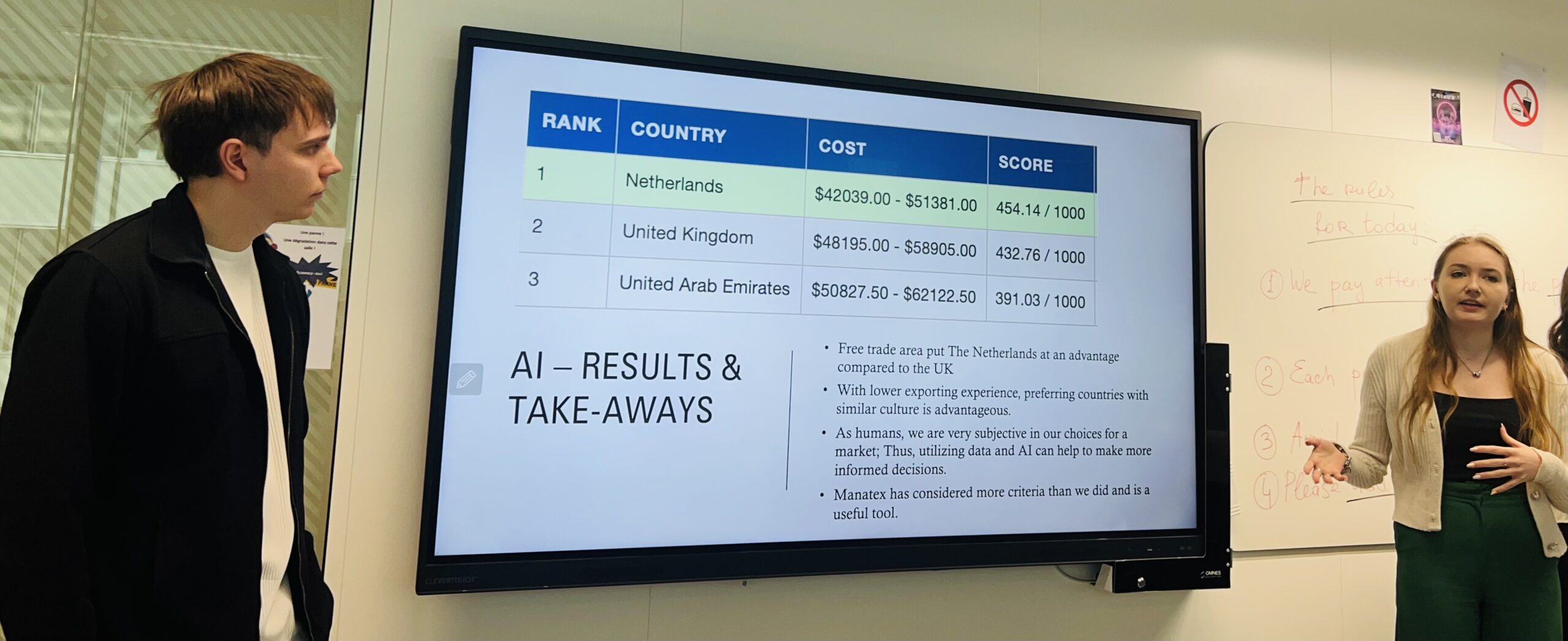
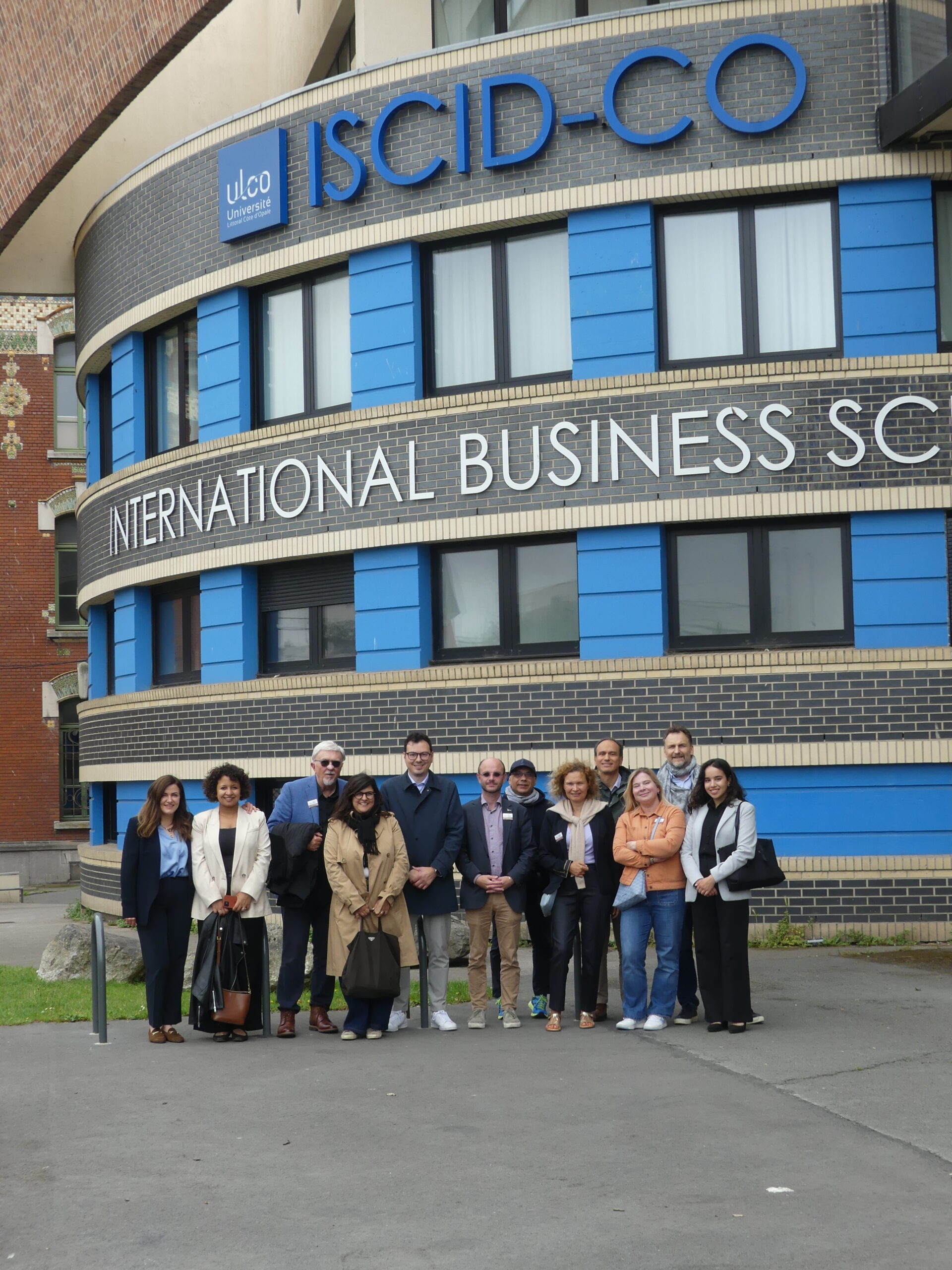
This challenge was recently discussed during an International Marketing class with students from American universities, taught by Nadya Mamet, Professor of International Business and Marketing and Co-founder of Manatex.
Guest expert Maria Bichl, with more than 20 years of marketing experience, shared her professional journey from traditional marketing approaches to managing AI agents.
Her experience illustrated how quickly professional roles are evolving and why students need exposure to current industry practices.
And marketing is only one example. The same transformation is taking place across international business, including market selection, export strategy, partner identification, market intelligence, and international sales.
Why Traditional International Business Education Needs to Evolve
Business schools have spent decades developing teaching methods based on textbooks, case studies, and business simulations.
These approaches remain valuable, but they also have limitations in a business environment increasingly shaped by AI and rapidly changing market conditions.
Outdated teaching materials
International business practices can evolve much faster than academic materials. Course presentations and case studies may remain unchanged for several years, even as new technologies transform how companies operate.
The limitations of traditional simulations
Business simulations help students understand strategic concepts in controlled environments. However, they often rely on predefined rules, fictional competitors, and simplified market conditions.
Real exporters face a different environment: changing tariffs, regulatory uncertainty, unfamiliar competitors, complex distribution networks, and incomplete information.
The challenge of generative AI
Generative AI introduces another challenge. Students can now produce convincing reports and strategic recommendations in seconds.
But generating an answer does not necessarily mean understanding it.
Without appropriate teaching methods, students may become dependent on AI-generated responses rather than developing their own analytical and decision-making skills.
The solution is not to remove AI from education. It is to teach students how to question, validate, and apply AI-generated information to real business decisions.
Three Ways Universities Can Modernize International Business Teaching
1. Bring Industry Experts into the Classroom
Professionals working directly with AI technologies, international markets, and business transformation can provide knowledge that is difficult to capture in textbooks.
Guest lectures and practical workshops allow students to understand how companies actually use AI and digital technologies.
Experts such as Maria Bichl bring first-hand experience, practical examples, and insights into how professional roles are changing.
2. Work with Real Companies and Business Challenges
Traditional case studies involving multinational companies such as IKEA or Toyota remain useful for understanding international strategy.
However, students can gain additional practical experience by working with real SMEs facing current international expansion challenges.
For example, students might help a French SME evaluate expansion into Germany, compare market opportunities in Southeast Asia, or identify potential distributors in the United Kingdom.
These exercises require students to consider real company capabilities, market conditions, competition, and entry costs.
3. Integrate Professional AI and Market Intelligence Tools
Many universities already provide access to professional databases and research platforms such as Statista.
The next step is to integrate tools that support actual business decision-making.
Rather than simply collecting information, students should learn how to evaluate markets, compare scenarios, interpret data, identify risks, and develop actionable international business strategies.
This is where professional AI-powered platforms can play an important role.
Manatex.digital: Bringing Real International Business Decisions into the Classroom
Manatex.digital is an AI-powered market expansion platform developed for SMEs, exporters, and international business consultants.
Unlike traditional business simulation games, Manatex.digital allows students to work with real companies, market data, and structured internationalization methodologies.
The platform combines several sources of expertise:
- Academic research and international business frameworks
- Benchmark cases and historical export projects
- International trade, economic, regulatory, and market data
- Decision-making methodologies developed by experienced international business consultants
- AI-assisted research, analysis, and report generation
Its approach combines automated analysis with explainable recommendations and human decision-making.
Students are encouraged not simply to accept AI recommendations, but to understand the assumptions, evaluate the evidence, and defend their strategic choices.
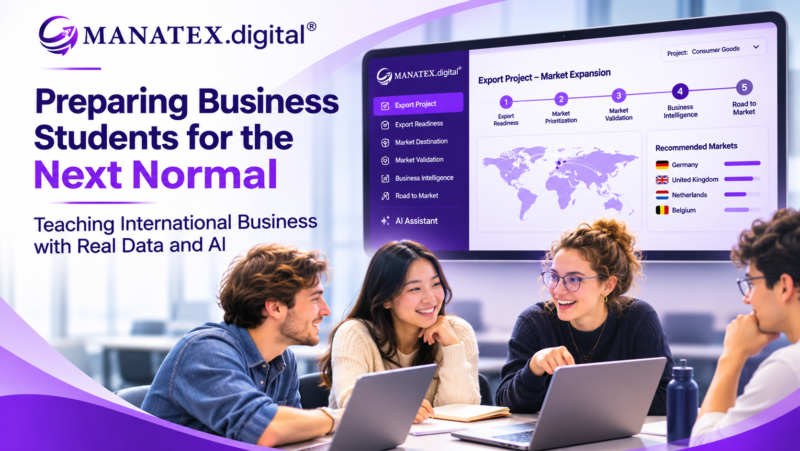
A Five-Step Practical Learning Journey
Students follow a structured process similar to the one used by international business professionals.
Step 1: Export Readiness
Understand the company, its products, resources, competitive advantages, and readiness for international expansion.
Step 2: Market Prioritization
Identify and compare potential export markets using trade statistics, economic indicators, and market attractiveness criteria.
Step 3: Market Validation
Evaluate product-market fit, market entry feasibility, potential costs, and the main opportunities and risks.
Step 4: Business Intelligence
Research local competitors, pricing, regulations, distribution channels, and potential customer segments.
Step 5: Road to Market
Develop a practical market entry strategy, identify potential clients or distributors, and prepare an actionable expansion plan.
The objective is to move students from theoretical understanding and Simulations to evidence-based international business decisions.
From Classroom Learning to Real Business Experience
Integrating Manatex.digital into international business courses allows professors to introduce a different type of practical assignment.
Instead of competing for points in a fictional business environment, student teams can work on real international expansion projects.
Each team can receive a company case, analyze potential markets, compare strategic options, and present recommendations supported by market intelligence.
Professors can evaluate not only the final report but also the quality of the reasoning, the interpretation of data, and the students’ ability to justify their decisions.
This approach helps students develop skills directly relevant to export management, international consulting, and global business development.
How Universities and Professors Can Work with Manatex
Manatex supports business schools and universities through two complementary approaches.
Universities looking to integrate real market intelligence and AI into their courses can explore Manatex Academia
Guest Lectures and Workshops on AI and International Business
Nadya Mamet and the Manatex team offer guest lectures and practical sessions covering topics such as:
- How AI is transforming international business and marketing
- Generative AI versus specialized AI-powered business tools
- AI applications in export management and international market research
- Practical methods for market selection, competitive intelligence, and international sales
These sessions combine academic knowledge with first-hand experience developing and using AI technologies for international business.
Manatex.digital for International Business Courses
Manatex also offers a teaching package designed for MSc International Business, MBA, and Executive MBA programmes.
The package includes:
- Ready-to-use teaching materials: Real SME case studies from different countries, practical assignments, and instructions for professors.
- Student access to Manatex.digital: Students work in groups of 3 to 5, with each group completing an international business project.
- Professor onboarding: Introductory training and support to integrate the platform into the course.
- Continuous assistance: Guidance during the learning activities and project execution.
- Additional AI training: Premium packages can include a webinar on using modern AI tools to accelerate international sales and business development.
Pricing is customized according to course duration, the number of student groups, and expected data usage.
Preparing Future International Business Managers
Artificial intelligence will continue changing how companies research markets, identify opportunities, manage international operations, and make strategic decisions.
Business schools have an opportunity to prepare students for this transformation by combining academic frameworks with real business challenges and professional technologies.
The objective is not to replace professors, traditional teaching methods, or human judgment.
It is to give students the opportunity to learn international business by working with real companies, real data, and the same types of tools they will encounter in their professional careers.
At Manatex.digital, we believe this combination of academic knowledge, practical experience, and AI-assisted decision-making can help prepare the next generation of international business professionals.
Interested in bringing real market intelligence and AI into your international business courses?
Contact the Manatex team at contact@manatex.co to discuss guest lectures, practical workshops, or platform access for your students.